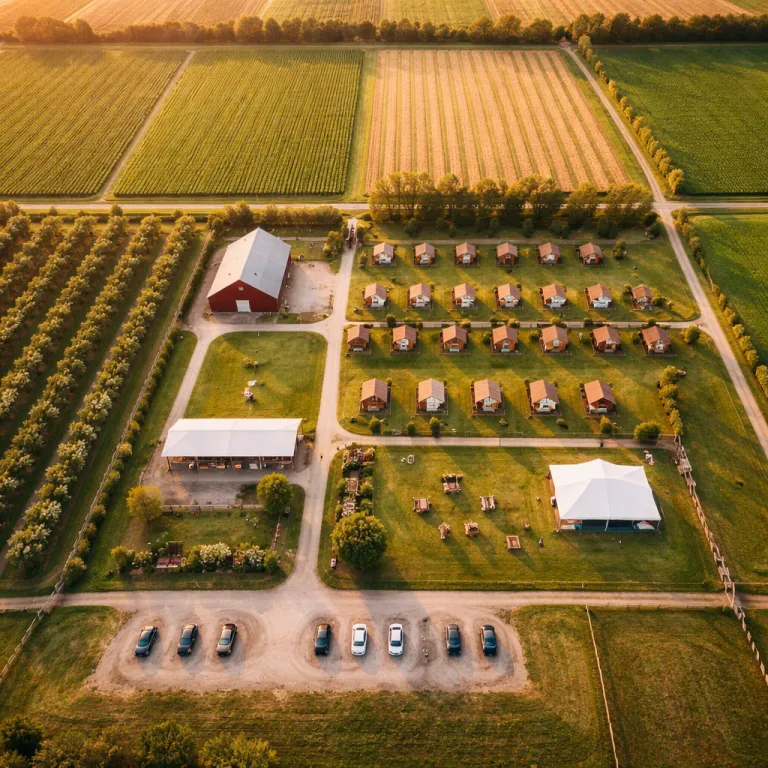
When agritourism scales up: what rapid growth means for luxury farm stays
The agritourism market is no longer a niche story whispered between winemakers and wellness retreats. As the global agritourism segment moves from a modest multi billion category toward a projected multi hundred billion expected reach in some broader rural tourism models, luxury travelers now sit at the center of a fast maturing industry. That acceleration forces anyone booking a premium farm stay to ask whether the very agritourism experiences they seek can survive the scale of this new industry.
At its core, agritourism is tourism involving farm based activities, and that definition matters when you are paying executive level rates for rural experiences. Narrow agritourism market estimates that focus on on farm stays, farm tours, and direct agricultural experiences place the sector in the high single digit billion range and project more than a doubling within a decade. Wider rural tourism valuations that fold in countryside resorts, farm adjacent recreation, and related hospitality services suggest a much larger global agritourism valuation. This surge in demand is not abstract; it shows up in the number of farms opening guest suites, the sophistication of online booking platforms, and the way local governments now talk about rural tourism as a strategic development lever.
For luxury guests extending a business trip, the key question is how this growth changes what happens on the farm. As interest in rural stays rises across multiple traveler surveys, demand pressure pushes farmers to shift from a few rooms above the barn to fully serviced farm based lodges with spa menus and tasting flights. That shift can enhance comfort and safety, yet it also risks turning farms into stage sets where agritourism activities are scheduled for visitors rather than woven into the real rhythm of rural areas.
Behind the scenes, the agritourism industry now involves three clear actors who shape your stay. Farmers act as hosts and operational leaders, tourists arrive as participants in agricultural life, and government agencies step in as promoters offering government support and marketing funds. This triangle explains why agritourism activities have multiplied from simple farm tours to workshops, farm table dinners, and immersive stays on working farms ranches that still rely on census agriculture data to plan their crops.
For many local farmers, agritourism is not a lifestyle accessory but a financial strategy. The sector’s development offers supplemental income that can stabilize a rural economy exposed to volatile commodity prices and climate risk. When you pay a premium nightly rate, you are not only buying rural tourism experiences; you are also participating in a market where your share of spending can either enhance local resilience or fuel speculative based tourism that sidelines the original farmers.
Growth also changes the way data is collected and used in this industry. Where once a farmer might have relied on intuition, now census agriculture figures, booking platform analytics, and regional tourism data shape decisions about room counts, table dining capacity, and which agritourism activities to promote. The expansion of the agritourism sector therefore reaches from the soil to the spreadsheet, making your choice of farm stay part of a much larger development story.
For the luxury traveler, the key is to read this market growth with a clear eye. A farm that has expanded to meet rising tourism demand is not automatically less authentic, just as a small property is not automatically pure. What matters is whether the farm’s daily work, its rural experiences, and its hospitality standards still orbit around agriculture rather than around a generic idea of countryside travel.
From family fields to corporate brands: the new power balance in agritourism
The most visible agritourism expansion arrives when global hospitality brands enter the field. A planned agritourism resort under a major luxury flag in Saudi Arabia signals that agritourism is no longer a side project for farmers but a serious industry vertical. For travelers used to executive suites and loyalty programmes, this raises a sharp question about whether corporate standards can coexist with the irregular, weather dependent nature of real farms.
On one side, corporate entry validates agritourism as a global agritourism category with clear key performance expectations and multi billion investment potential. Large groups bring capital for infrastructure, professional training, and sophisticated marketing that can enhance the visibility of rural areas which previously struggled to attract international visitors. They also tend to work closely with government agencies and local governments, aligning with government support schemes that frame agritourism as a pillar of rural development and tourism diversification.
On the other side, this same wave of agritourism market growth can tilt power away from local farmers. When land values rise because of tourism, farmers may feel pressured to lease fields to hospitality operators or pivot from food production to guest entertainment, changing the rural economy in subtle but lasting ways. In extreme cases, farms become themed resorts where the farm table is a design motif rather than a place where the day’s harvest is plated within hours of picking.
Luxury travelers have seen this movie before in other corners of the hospitality industry. The evolution of design led city properties, eco focused lodges, and even urban serviced apartments shows how quickly a niche concept can be standardized once large brands chase market share. A refined urban residence such as the property reviewed in the article on premium urban comfort in Reykjavík demonstrates how consistency and service can scale without losing character, yet the translation of that model to working farms is far from straightforward.
Family run farms ranches operate on seasonal labour cycles, weather risks, and long term soil health, not quarterly earnings calls. When agritourism activities become the primary revenue driver, there is a temptation to smooth out the rough edges of rural life to meet guest expectations shaped by city hotels. That smoothing may enhance comfort but can also erode the very rural experiences that drew visitors away from the city in the first place.
Government support plays a double role in this shift. Grants and promotional campaigns can help small farms invest in safe accommodation, digital booking tools, and training that elevate the guest experience to luxury standards. Yet when incentives favour large scale based tourism projects, local governments may unintentionally privilege investors over local farmers, accelerating consolidation in the agritourism market.
For the executive traveler, the practical takeaway is to look closely at ownership and governance when choosing a farm stay. Ask whether the farm is still operated by the family whose name is on the gate, how much of your nightly rate returns to the rural economy, and whether the property’s development has been shaped by local voices or distant shareholders. Those questions turn your booking into a deliberate act within a fast changing industry.
Where authenticity ends and themed countryside begins
The sharpest agritourism market shift is felt at the boundary between real agriculture and staged rural tourism. As demand surges, more properties market themselves as farm based retreats even when the farm component is minimal or purely decorative. For a traveler who values soil level authenticity, the task is to separate working farms from countryside resorts that simply borrow the aesthetic of rural areas.
Authentic agritourism activities are anchored in the daily operations of farms and ranches. That might mean joining a dawn milking, walking irrigation lines with the farmer, or sitting at a farm table where the menu reflects what the fields and barns can genuinely supply that week. In contrast, themed properties often offer table dining experiences where the ingredients arrive from distant suppliers while the on site fields are maintained mainly for photographs and sunset walks.
Luxury does not have to mean detachment from the rural economy. Some of the most compelling rural tourism stays in Europe and Asia pair high thread count linens with serious commitments to local farmers, from long term purchasing contracts to shared ownership models. A thoughtful example of this balance appears in the kind of refined rural escapes described in the feature on serene stays in the Bulgarian countryside, where comfort is used to frame, not replace, the agricultural story.
Data from multiple market studies show that agritourism is growing because travelers want authentic experiences rather than staged entertainment. One concise summary captures this dynamic clearly: “What is agritourism? Tourism involving farm-based activities.” and “Why is agritourism growing? Demand for authentic experiences.” and “How does agritourism benefit farmers? Provides additional income.” Those statements underline why the agritourism market’s rapid expansion must be managed carefully if it is to enhance rather than hollow out rural experiences.
For high end guests, the most reliable authenticity tests are simple. Ask how many hectares of land are actively farmed, how many people work full time in agriculture versus hospitality, and whether census agriculture data still shapes planting decisions more than guest feedback forms. If the answers lean heavily toward design, events, and generic tourism, you are likely in a countryside resort rather than a true agritourism farm.
There is also a sensory dimension that no market report can capture. On a genuine working farm, you will notice the timing of meals shifting with the weather, the presence of mud where it is inconvenient, and the occasional clash between animal needs and guest schedules. These are not service failures; they are signs that agriculture still leads and that your travel experience is based on reality rather than on a script.
As the agritourism market moves toward its next billion expected in value, the pressure to standardize will only intensify. The properties that will matter most for discerning travelers are those that protect the primacy of the farm while still offering the level of privacy, service, and comfort that a business leisure guest reasonably expects. Choosing those places is the most effective way to keep authenticity on the right side of the line.
How to book into growth, not overrun: a playbook for executive travelers
The agritourism market’s rapid growth can work in your favour if you book with intention. Rapid development means more choice, better infrastructure, and a wider range of rural tourism experiences at the luxury end of the spectrum. It also means that the gap between meaningful agritourism and generic countryside travel is widening, so your due diligence matters more than ever.
Start by reading the farm’s story with the same care you would apply to a financial report. Look for clear evidence that agriculture remains central: references to specific crops, livestock breeds, harvest calendars, and the way census agriculture data or regional statistics inform decisions. When a property speaks only in vague terms about nature, wellness, and escape without naming the actual farm work, you are likely dealing with based tourism that uses rural areas as a backdrop rather than as a living economy.
Next, examine how the property positions its farm table and table dining experiences. A serious agritourism farm will be transparent about what comes from its own fields, what is sourced from neighbouring farms, and how it collaborates with local farmers to enhance both flavour and rural economy resilience. When menus lean heavily on imported luxuries while the on site farms ranches remain ornamental, the agritourism label is doing more marketing work than agricultural work.
Booking platforms now play a key role in shaping the agritourism market. On a curated site such as farmstayplace.com, filters for working farms, vineyard stays, or equestrian properties help you align your travel with specific agritourism activities rather than with generic countryside lodging. Features like private vineyard picnics with premium wines across the United States illustrate how luxury experiences can be built around real agricultural production instead of around staged rural imagery.
Government support and local governments’ policies also influence what you will find on the ground. Regions that treat agritourism as a tool for rural development tend to integrate farmers into planning, ensuring that tourism revenue provides supplemental income without displacing core agricultural production. Where policy focuses mainly on headline grabbing investments and visitor numbers, the agritourism market’s expansion can skew toward large projects that capture most of the market share while leaving smaller farms behind.
For business leisure travelers, time is often tight, so a few targeted questions before booking can make the difference. Ask the host which agritourism activities are seasonal, how many nights guests typically stay, and whether there are opportunities to engage with daily farm routines rather than only with curated experiences. Simple practices such as booking in advance, checking seasonal activities, and respecting farm rules will also enhance your stay and signal to hosts that you value the integrity of their work.
Finally, remember that your spending patterns send a clear signal into this fast growing industry. Choosing properties where agriculture leads, where local farmers are visible partners, and where rural experiences are grounded in real work rather than in staged scenes helps steer the agritourism market toward sustainable, soil first growth. In a sector racing toward new billion expected milestones, that kind of intentional booking is one of the few levers travelers truly control.
Key figures shaping the future of luxury agritourism
- Fortune Business Insights and Grand View Research, using a narrow definition focused on on farm activities and direct agricultural experiences, estimate the global agritourism market size at around 9.18 billion USD for the mid decade period, with projections suggesting growth to approximately 15.78 billion USD within five years and a compound annual growth rate close to 12 percent.
- Future Market Insights and Coherent Market Insights, which apply a broader lens that includes rural tourism, farm based recreation, and related hospitality services, indicate that the wider agritourism market could reach well over 200 billion USD within a decade, with some scenarios citing valuations above 300 billion USD in the same horizon.
- The difference between these figures arises from methodology: some reports track a narrow stream of agritourism revenues tied directly to farms and ranches, while others include countryside resorts, outdoor recreation, and ancillary services in their models.
- North America is reported to hold close to 40 percent of global agritourism market share in several of these studies, a concentration that shapes where luxury farm stays, corporate investments, and government support programmes are most visible for international travelers.
- Forward looking datasets for the period from the late twenties to early thirties consistently show agritourism market values rising from just above 10 billion USD to nearly 16 billion USD under the narrow definition, reinforcing the expectation that agritourism will remain one of the fastest growing segments within rural tourism and the wider travel industry.
References: Future Market Insights, “Agritourism Market Outlook”; Grand View Research, “Agritourism Market Size, Share & Trends”; Fortune Business Insights, “Agritourism Market Analysis”; Coherent Market Insights, “Global Agritourism Market Report”. Figures cited here are drawn from the most recent publicly available summaries at the time of writing and reflect each provider’s stated scope and methodology.