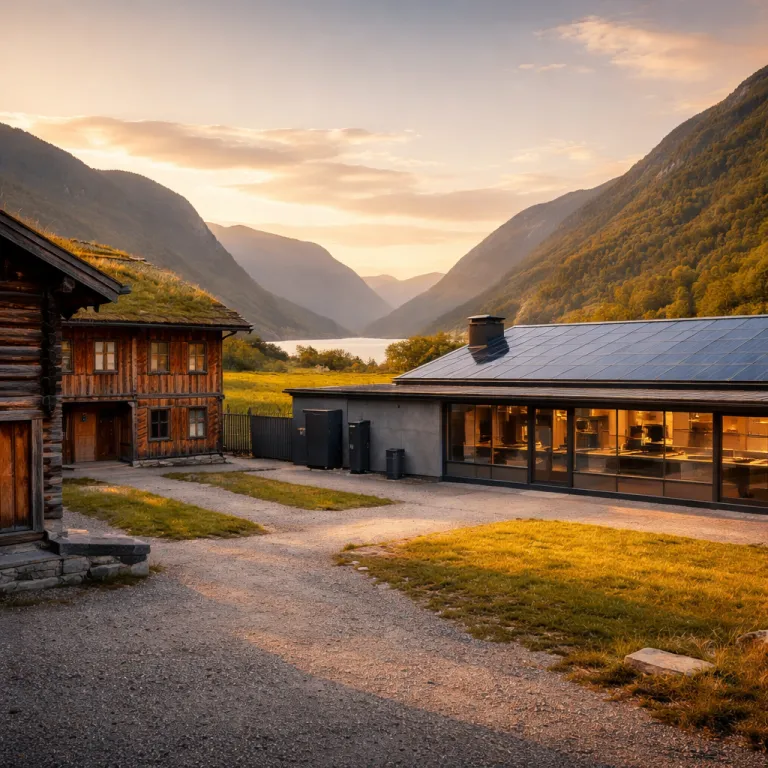
The Norway farm hotel model: timber heritage, low impact systems
A Norway farm hotel that is genuinely sustainable starts with the building itself. Many of the most characterful places to stay in Norway are historic timber farmsteads where thick log walls, turf roofs and compact rooms naturally conserve energy. This is where guests feel the difference between a themed property and a working Norwegian farm hotel that has quietly optimised its environmental footprint for generations.
Across Norway, farm owners are pairing traditional layouts with discreet technology that reduces energy use without disturbing the sense of place. Heat pumps hum in the background, solar panels sit low on barn roofs and grey water systems protect the nearby river, fjord or valley from pollution. According to Innovation Norway’s summaries on green travel, hundreds of rural accommodations now hold eco certifications, reflecting how mainstream these systems have become. The result is a style of eco friendly luxury where the accommodation will feel both deeply rooted and surprisingly forward looking.
On a well run rural hotel in Norway, sustainable practice extends far beyond the heating system. Kitchens track food waste as carefully as they track lambing dates, and many guest rooms are furnished with restored pieces rather than new imports. Guests who care about environmental impact will find that this quiet rigour matters more than any design statement, and that a Norwegian farm hotel with strong environmental credentials often feels warmer and more personal than a conventional resort.
Boen Gård and the rise of the energy positive farm estate
Boen Gård near Kristiansand has become a reference point for anyone researching a Norway farm hotel that is sustainable yet indulgent. The estate’s old timber buildings frame a courtyard where guests move between rooms, orchards and the river, while the kitchen operates almost entirely on organic ingredients grown or caught on the property. It is a working farm first, a luxury hotel second, and that hierarchy shapes every part of the guest experience.
Here, the goal is not just low impact but an energy positive rhythm of life. Renewable energy from small scale hydro and carefully placed solar panels supports the hotel rooms and farm operations, while heat pumps stabilise temperatures in ageing structures that were never designed for modern insulation. When you sit down to dinner, the local food on the plate reflects this closed loop system as clearly as any sustainability report. As one manager explained in a recent interview, the aim is to “let the buildings and the landscape do most of the work, and add technology only where it truly helps.”
Boen Gård is part of a wider Norwegian movement that international guides have started to track, including the quiet farm revolution highlighted in the Michelin farm hotel selection and in Global Sustainable Tourism Council case studies on rural stays. Across Norway, similar properties are proving that a positive hotel model can coexist with serious culinary ambition. Guests who arrive for the food often leave talking about the environmental systems that made that meal possible.
Seasonal light, local food and the rhythm of the arctic year
To understand a Norway farm hotel that is sustainable, you need to understand the light. In the south, long summer evenings stretch service on the terrace, while in the north, the midnight sun keeps guests lingering over dessert as the valley never quite darkens. In winter, the same farms pivot to candlelit dining rooms where the northern lights sometimes flicker beyond the window.
This extreme seasonality shapes everything from planting schedules to menus. Norwegian farmers build their year around short, intense growing periods, then rely on cellars, smoking sheds and fermenting rooms to carry local food through the darker months. Guests who time their stay carefully will find strawberries in July, root vegetables in February and lamb that has grazed on mountain pasture during the brief arctic summer.
At properties such as Renndølsetra in Innerdalen or Flatheim on the Scenic Route Gaularfjellet, the Norway farm hotel experience is inseparable from this agricultural calendar. Rooms may be simple, but the food is precise, seasonal and quietly luxurious. Couples planning an arctic adventure can use these rhythms to choose their moment, then cross reference with other curated retreats such as the luxury accommodation with natural views we feature in New South Wales for a sense of how different hemispheres handle the same sustainability questions.
From Fokhol Gård to Yggdrasil: contrasting northern farm stays
Norway’s sustainable farm stays are not a single template; they are a spectrum. At Fokhol Gård in Stange, a community run farm and guesthouse, the focus is on organic farming, shared meals and a gentle pace that suits guests who want to participate in daily work. Ytterbakke Farm Accommodation near Åndalsnes, by contrast, positions itself as a comfortable base for fjord hikes and mountain drives, with the farm as a calm counterpoint to the drama outside.
Further north, Yggdrasil Farmhotel Retreat, Spa & Yoga in Straumsbukta leans into wellness, using the surrounding arctic landscape as a natural spa backdrop. Here, a Norway farm hotel that is sustainable means low impact energy systems, careful management of food waste and a programme of yoga and treatments that respects the fragile coastal ecosystem. Guests move between rooms, sauna and shoreline, often timing their visit for either the northern lights or the long glow of the midnight sun.
Rosvang Gaard by Rødven Fjord and Flatheim in their respective valleys show yet another face of Norwegian farm hospitality. Both balance heritage architecture design with modern comforts, proving that a hotel in a working farm setting can feel genuinely luxurious without excess. Couples comparing these places to stay with Swedish gårdshotell or Danish countryside inns will find that Norway’s combination of rugged topography and strict environmental standards creates a distinctly sharper, more elemental experience.
Svart, the arctic circle and the future of energy positive farm hotels
Talk to Norwegian hoteliers about the future and one name keeps surfacing: Svart. The planned Svart hotel near the arctic circle, by the Svartisen glacier, has been designed as an energy positive property that aims to generate more power than it consumes. Its circular architecture design, inspired by traditional fishing structures, maximises solar gain while minimising disturbance to the surrounding fjord.
While Svart is not a farm in the traditional sense, its philosophy is already influencing how rural properties think about energy and environmental impact. A Norway farm hotel that is sustainable can borrow from this model by integrating solar panels on barn roofs, using heat pumps to stabilise old timber rooms and designing circulation so that guests naturally use less energy. The ambition is clear: the next generation of eco friendly farm hotels in northern Norway will not just be low impact, they will be genuinely energy positive.
For couples planning an arctic adventure, the region around the arctic circle offers a compelling mix of working farms, coastal lodges and forward looking projects like the Svart hotel. You might spend one night in a simple farmhouse watching the northern lights, then move to a more experimental positive hotel concept that showcases cutting edge technology. Across these stays, the constant thread is a Norwegian respect for landscape that treats energy as a precious resource rather than an invisible utility.
How to book a sustainable Norway farm hotel for a romantic stay
Booking a Norway farm hotel that is sustainable starts with timing and research. Many properties, such as Renndølsetra, operate only in summer, while others like Fokhol Gård welcome guests year round with different seasonal experiences. Always check availability directly with the farm or through trusted platforms, then confirm how their environmental practices align with your expectations.
For couples, the sweet spot often lies in shoulder seasons when rates soften but the landscape still feels generous. Expect a wide range of price points; community run farms may offer simple rooms with shared facilities, while more polished luxury estates command higher rates for larger hotel rooms, spa access and tasting menus. When comparing options, look beyond marketing language about eco friendly values and ask specific questions about energy sources, food waste management and the proportion of local food used in the kitchen.
Travel logistics matter too, especially in northern regions where distances between places to stay can be long. Many Norwegian farms sit within a few hours of major cities by train or car, but some arctic circle properties require an extra ferry or small plane. If you value pedestrian friendly environments and car free evenings, study how villages are laid out and use resources like our guide to pedestrian friendly villages with intimate inns as a framework for evaluating rural Norwegian settlements.
What couples will find on a sustainable Norwegian farm stay
Arrive at a well run Norway farm hotel and the first impression is usually quiet. You hear animals, tools, maybe a river, but not much else, and that calm sets the tone for a stay that feels both luxurious and grounded. Guests quickly understand that this is not a stage set; it is a working farm where your comfort has been woven into daily routines rather than imposed on them.
Days tend to follow the light. In summer, you might wake early, share breakfast built from local food, then head out to walk a valley trail or paddle along a fjord before the sun climbs too high. In winter, the rhythm slows, with long lunches, reading by the fire and perhaps a late night walk to watch for the northern lights when the sky clears.
Throughout, the environmental systems stay mostly invisible. Energy efficient lighting, heat pumps and careful insulation keep rooms comfortable without drama, while discreet signage explains how to reduce food waste at the buffet or separate recycling. Couples who arrive with a download of sustainability checklists will find that the best Norwegian farm hotels meet those standards almost incidentally, because caring for land and resources has always been part of the job.
Key figures on sustainable farm stays in Norway
- Norway counts hundreds of eco certified accommodations across the country, according to recent summaries from Innovation Norway and the national tourism board, showing how mainstream sustainable hospitality has become in rural and urban areas alike.
- The Global Sustainable Tourism Council has reported that a majority of tourists now actively seek sustainable options, a trend that directly supports the growth of Norway farm hotel experiences that prioritise environmental performance.
- Community run projects such as Fokhol Gård demonstrate how local partnerships with tourism boards and environmental organisations can turn small farms into influential models for low impact rural development.
- The combination of organic farming, renewable energy and traditional building techniques on Norwegian farms illustrates how innovation can emerge from long established practices rather than from new construction alone.
FAQ about sustainable farm hotels in Norway
What is a farm stay in Norway and how does it differ from a regular hotel?
A farm stay in Norway is lodging on a working farm where guests sleep in converted farm buildings or adjacent rooms while daily agricultural activities continue around them. Compared with a standard hotel in a town or city, these properties offer closer contact with animals, fields and local food production. Many Norwegian farm stays combine modern comforts with rustic architecture, creating a quieter, more immersive experience.
Are Norwegian farm stays suitable for couples seeking luxury?
Yes, several Norwegian farm hotels cater specifically to couples who want privacy, high quality food and thoughtful design. Properties such as Boen Gård or carefully restored valley farms offer spacious rooms, refined service and tasting menus built around seasonal produce. The luxury here is subtle, expressed through silence, craftsmanship and environmental care rather than overt glamour.
Do sustainable farm hotels in Norway offer modern amenities?
Many sustainable farm stays in Norway provide modern amenities such as private bathrooms, strong heating systems, quality bedding and reliable Wi Fi. Renewable energy technologies like heat pumps and solar panels are often integrated into historic structures to maintain comfort with a lower environmental footprint. Guests should always check individual property details, as some community run farms intentionally keep facilities simple.
How can I book a sustainable farm stay in Norway?
You can book Norwegian farm stays directly through each farm’s website or via reputable tourism platforms that specialise in rural accommodation. Because many properties have limited rooms and strong seasonal demand, it is wise to reserve well in advance, especially for summer and northern lights periods. When booking, ask specific questions about energy use, local food sourcing and transport options to ensure the stay aligns with your sustainability priorities.
Are Norwegian farm stays open all year round?
Availability varies widely across Norway. Some farms, particularly those in higher valleys or near the arctic circle, open only in summer when access roads are clear and grazing is active. Others, especially in milder southern regions, operate year round, adjusting activities and menus to reflect winter conditions and shorter days.