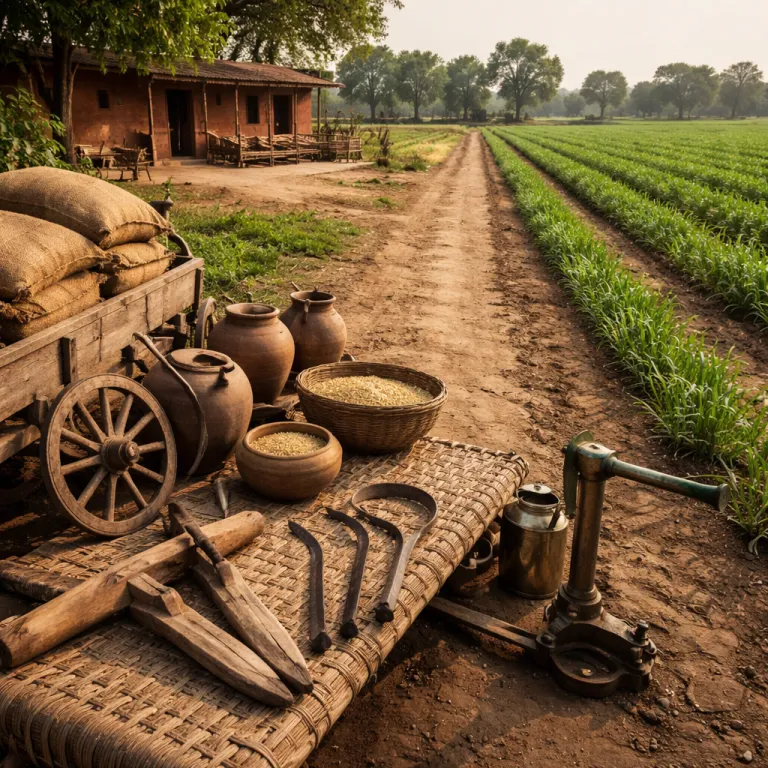
What Punjab's new farm stay policy means for luxury rural tourism
Punjab has introduced a detailed farm stay framework that quietly rewrites how agritourism will operate in India. Under this new policy for rural stays, the state government positions every eligible Punjab farm as both a working landscape and a potential high-end retreat for discerning guests. For travelers used to scanning hotel listings, this is the moment when a farm stay in the state becomes a serious alternative to a city suite.
The policy, cleared by the Punjab cabinet under Chief Minister Bhagwant Mann and now awaiting full notification in the official gazette, defines a farm stay as a farm-based property on at least 1 acre of land with lodging, boarding, and a minimum of two experiential activities. That means your stay will typically include guided walks through wheat or kinnow orchards, hands-on dairy sessions, or slow tractor tours across the Shivalik belt foothills rather than staged village tableaux. For luxury and premium booking platforms, this clarity around what a stay policy covers finally allows curated listings of approved farm stays that meet consistent standards across the state.
Behind the policy is a clear rural tourism strategy that treats farmers as hospitality partners rather than permit seekers. The Punjab government describes the Farm Stay Policy 2026 in cabinet notes and press briefings as a way for farmers to offer farm-based accommodations to tourists, and notes that farmers with at least 1 acre of land in Punjab are eligible to participate. For travelers, that means a growing portfolio of registered farm stays where the result is traceable: you know the property has passed through a defined approval process rather than a backdoor arrangement.
Financially, the policy leans hard into incentives that make premium-level comfort viable on working land. Government statements outline a 10 percent capital subsidy reportedly capped at 50 lakh rupees, a substantial reimbursement of state GST on eligible services, and reimbursement of certification costs up to 20 lakh rupees, which directly supports higher quality rooms and better services. For a luxury-focused booking website, those numbers translate into more properties willing to invest in high thread count linens, serious mattresses, and professional services such as water quality testing without pricing themselves out of the rural tourism market.
Regulation has been designed around ease of doing business rather than red tape, which matters if you are planning a stay months in advance. There are no CLU fees, electricity is billed at domestic rather than commercial tariffs according to the draft framework, and registration is handled through the FastTrack Punjab online portal with a promised 21-day turnaround. Oversight is primarily complaint driven, so while the Department of Tourism and other state agencies can intervene when needed, there are no routine inspections that might suddenly shut down your booked stay at an approved farm just before arrival.
Built form is tightly controlled, which is where the policy shows its ethics around land use and landscape. Ground coverage is capped at 10 percent, with a maximum of nine rooms, two storeys, 9 metres in height, and 18 guests, so even the most ambitious farm stays remain visually subordinate to the fields. For travelers, that means the view from your verandah will be more about mustard and sugarcane than concrete, and the policy result is a scale of hospitality that feels intimate rather than resort-like even when you book through a polished luxury platform.
How Punjab compares with other agritourism frameworks worldwide
For travelers who already track farm tourism trends from Kerala to Tuscany, Punjab’s move sits in a wider regulatory story. Tamil Nadu and Kerala both promote rural tourism, yet their frameworks are looser on construction caps and less explicit on how many experiential activities a farm stay must offer, which can result in uneven guest experiences. By contrast, the Punjab farm stay framework for 2026 reads almost like a hospitality manual for farm-based lodging, specifying what will be allowed and what remains strictly agricultural land.
Internationally, Tasmania’s approach to agritourism often relies on planning exemptions for existing farms, which keeps bureaucracy light but leaves more interpretation at local council level. Punjab’s model, anchored by a clear stay policy and the FastTrack Punjab portal, centralises approvals while still promising ease of business for farmers who want supplementary income from guests. For a luxury booking website, that centralisation means more reliable data on which properties are genuinely registered farm stays and which are rural guesthouses using agricultural language loosely.
There is also a governance contrast in how different jurisdictions treat ethics and enforcement. Punjab’s complaint-driven oversight means that tourism officials and technical agencies step in only when there is a reported issue, rather than through routine inspections that can feel punitive to farmers. In states where tourism departments or local panchayats conduct frequent checks, the result can be a cautious, low-investment approach to hospitality, whereas here the Punjab cabinet signals trust in farmers as partners in rural tourism rather than suspects.
Critics, including Public Action Committee member Kuldeep Khaira quoted in regional news outlets such as The Tribune, warn that the cabinet-approved framework could still encourage conversion of agricultural land into quasi resorts. That concern is not unique to this state; similar debates surface in Kerala when homestays expand, and in European wine regions where tasting rooms creep into vineyards. The difference in Punjab is the explicit cap on rooms and guests, which, if enforced with rigorous monitoring, should limit the percent of farms that morph into full-scale leisure complexes.
For travelers comparing destinations, this means Punjab offers a more codified version of what agritourism can be. In Kerala, a farm stay might range from a simple family home to a near resort, while in Punjab the policy defines a narrower band of comfort and capacity that still allows premium finishes. That clarity is useful when you are weighing a weekend in the Shivalik belt against, say, a stay at a Georgia property analysed in depth in this guide to what a Michelin-level American agriturismo gets right.
For solo explorers planning multi-stop itineraries, the Punjab framework also interacts with state-level tourism and agriculture departments in a more coordinated way than in many regions. Where other states sometimes treat tourism as a side portfolio, here the Department of Tourism and Cultural Affairs works alongside agricultural cooperatives and local tourism boards, creating a more integrated services ecosystem. That institutional alignment matters when you expect reliable transfers from Chandigarh, consistent information on registered farm stays, and a clear channel for any complaint that might require administrative or technical follow up.
What this means for luxury farm stay bookings and on the ground experiences
For guests booking through high-end platforms, the updated Punjab farm stay rules change both the search filters and the on-site reality. You can now look specifically for registered farm stays that meet the policy definition, confident that each stay will include at least two genuine farm activities rather than staged photo opportunities. That might mean joining the farmers for early morning milking, walking irrigation channels with a land owner who explains water ethics, or tasting ghee churned metres from your room.
From an income perspective, the policy is explicit: farmers are promised additional income, financial incentives, and marketing support. That supplementary income is not a side hustle; for many Punjab farm households it can stabilise finances in seasons when crop prices fall, and early departmental briefings have cited indicative projections of around 20,000 rupees per month in additional earnings for participating farmers. For travelers, that financial backbone often shows up as better maintained rooms, more attentive services, and hosts who can afford to invest in training and safety rather than cutting corners.
Luxury and premium booking websites now have a clearer brief when curating Punjab listings. Properties must respect the 10 percent ground coverage rule, the nine-room cap, and the 18-guest limit, which naturally favours intimate farm stays over anonymous complexes, and that aligns with the expectations of travelers who value quiet over crowds. Platforms can highlight approved farm properties where cabinet-cleared status is documented, and where digital marketing support from the state helps present high quality photography and transparent policy information alongside availability calendars.
On the regulatory side, the absence of CLU fees and the use of domestic electricity tariffs reduce operating costs, which can keep nightly rates competitive with urban hotels in Chandigarh or Amritsar. The FastTrack Punjab portal simplifies registration, so more farmers are allowed to enter the market without navigating a maze of offices, and that should increase the percent of rural tourism options available in under-explored districts. For guests, a broader spread of farm-based stays means you can pair a night near the Shivalik belt with another deep in the Malwa plains, building a route that follows crops rather than highways.
There are still risks, and serious travelers should read the news and policy documents rather than only marketing copy. Critics worry about a policy backdoor that might let non-agricultural investors front projects through nominal farmers, and about the potential need for detailed audits if land use violations emerge at scale. Booking platforms with a commitment to ethics can respond by prioritising properties where the host family is visibly involved in daily farm work and where the result of your stay is clearly reinvested in the land rather than siphoned off to distant owners.
For inspiration on how to read between the lines of rural listings, it is worth studying other regions where editorial curation has shaped guest expectations, such as this guide to elegant bed and breakfast stays in Santa Fe or this seasonal briefing on farm stays that sell out long before harvest. Punjab’s framework suggests that similar editorial standards can now be applied to Indian farm tourism, with clear policy lines, measurable services, and a shared understanding that the best rural stays keep the farm at the centre of the experience. For solo explorers, that means your next booking in this state is not just a room in the countryside but a calibrated entry into a working landscape where policy, hospitality, and soil all matter.