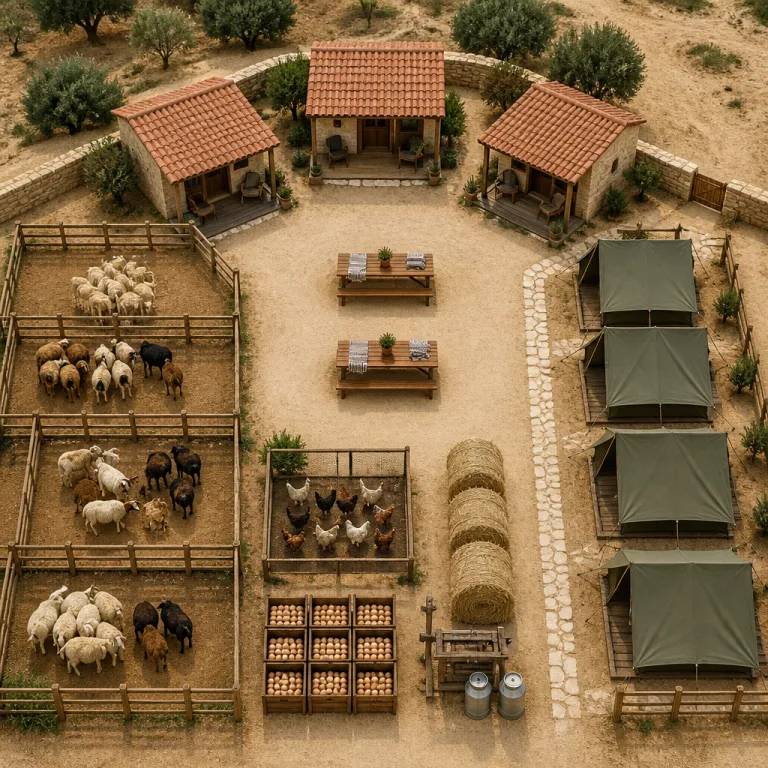
What working livestock farm stay accommodation really means
A genuine working livestock farm stay accommodation is not styled around a theme; it is structured around animals that must be fed, milked, and moved on time. Your stay follows the rhythm of the farm, with pre dawn milking, mid afternoon feeding rounds, and late evening pen checks shaping each day. This is where rural life becomes your temporary timetable, and where you will learn how different types of farming dictate when you eat, sleep, and explore.
On a serious working farm, guests see the difference between decorative animals and herds that pay the bills, because the work never pauses for a perfect farmstay photo. You might help with light farm tasks such as bottle feeding lambs, collecting eggs, or leading horses to pasture, while the farmers handle the heavier work that keeps the food farm operation safe. At Stone & Thistle Farm in East Meredith, New York, for example, guests can watch the morning livestock checks while the owners manage rotational grazing and on farm meat processing that underpin the business.
Across the United States there are now hundreds of farmstays, yet only a portion qualify as true working livestock farm stays where production comes first. Properties such as Together Farms in Wisconsin, Celtic Glen Heritage Livestock in New York State, and Stone & Thistle Farm show how a working farm stay can still offer premium bedding, strong showers, and thoughtful meals without softening the reality of mud, noise, and early starts. When you find farmstay listings that mention specific breeds, herd sizes, and daily routines, you will find the kind of grounded experiences that reward an open mind and a willingness to trade late nights for fresh air at dawn.
How to tell real working farms from staged rural sets
Before you book any farm stay, read the description as closely as you would a wine label, because the language reveals whether you are entering a real working farm or a rural backdrop with a petting zoo. Serious farmstays offer details about breeds, flock numbers, calving seasons, and the exact farming activities that shape each day, while vague promises of generic farm life usually signal staged experiences. A premium booking website that curates different types of farm stays will highlight these specifics so you can match your stay to the level of work and immersion you actually want.
Look for mentions of a cattle ranch with rotational grazing, a dairy farm with on site cheesemaking, or an organic farm that presses its own olive oil and sells it alongside seasonal vegetables. When a host explains how guests can learn skills such as basic herding, milking, or pasture checks, you know the farmstay is built around real production rather than only a post Instagram moment. Listings that describe the type farmstay clearly, from sheep stations to horse breeding farms, help you understand which experiences are hands on and which are better enjoyed from a comfortable chair with a long view over the paddocks.
Authentic working livestock farm stay accommodation also acknowledges the sensory reality of farming, including smells, mud, and the sound of tractors before sunrise, instead of pretending that rural life is always quiet and clean. Properties that set expectations honestly tend to attract guests who arrive with an open mind and leave with a deeper connection to food, land, and animals. As one guest at Celtic Glen Heritage Livestock noted after a spring lambing stay, “We came for the scenery and left with a real respect for 5 a.m. feedings and the people who do them every day.”
From sheep stations to dairy barns: choosing your livestock rhythm
The type of working livestock farm stay accommodation you choose will shape every hour of your stay, because different animals demand different routines. Sheep stations in places like New Zealand or rural Australia often focus on mustering and shearing, with peak shearing seasons in late spring and early summer, while dairy farms in regions such as Switzerland or the Netherlands revolve around twice daily milking and careful cheesemaking. Cattle ranch properties in the United States or Argentina may emphasize riding, herding, and long days in the saddle, which creates a very different experience from a quiet organic farm that grows vegetables and presses olive oil.
On a sheep focused farmstay, you might learn skills related to wool grading, fencing, and working with dogs, while on a dairy farm you will learn how milk becomes yogurt or cheese and why timing matters. A ranch stay often includes time in the saddle, gate duty, and simple farm tasks around the corrals, which can be exhilarating for couples who want to work alongside their hosts rather than simply watch. Each of these farmstays offer distinct experiences, so you should match your preferred level of physical work, animal contact, and downtime to the specific type farmstay you book.
Some working farms, such as heritage breed operations, focus on conservation as much as production, which adds another layer of meaning to your stay. At places like Celtic Glen Heritage Livestock, where rare sheep and cattle are raised, or Stone & Thistle Farm, which integrates pasture based livestock with on farm dining, you will find a blend of education, comfort, and genuine farm life that suits travellers who care about where their food comes from. For a more intimate scale, refined countryside escapes on smaller properties can balance hands on farming with quiet evenings, giving you time to reflect on the day while still enjoying premium linens and thoughtful service.
Co creating the stay: when guests join the working day
On the most rewarding working livestock farm stay accommodation, you are not only an observer but a temporary member of the farm team, which changes how you remember the trip. Co creation means you join the rhythm of the day, perhaps helping with a morning feed round, shadowing the farmer during pasture checks, or assisting with simple food farm preparation in the kitchen. This kind of participation turns abstract ideas about farming into lived experiences, and it often becomes the story you share long after any polished post on Instagram fades.
Hosts happy to involve guests will usually outline clear boundaries, explaining which farm tasks are safe for visitors and which remain the responsibility of trained staff, so you can work confidently without disrupting operations. You might collect eggs, wash vegetables from the organic farm garden, or help plate a meal where every ingredient has travelled only a few metres, while the farmers handle machinery and complex animal care. When farmstays offer this level of structured involvement, couples gain a deeper understanding of rural life while still returning to a comfortable room with hot water, good lighting, and a bed that respects tired muscles.
Many guests arrive thinking they will only stay for the scenery, then find themselves unexpectedly moved by the intimacy of feeding animals or seeing how calmly a working farm handles unpredictable weather. The combination of fresh air, physical work, and shared meals with the family can reset your sense of time and priority in ways that no spa treatment can match. In agritourism research, a working farm stay is often defined as “a lodging experience on a working farm,” which captures the idea that it is not just a place to sleep but a framework for learning, connection, and a more grounded way to travel.
How to book luxury without losing the farm edge
For couples used to premium hotels, the key to booking a working livestock farm stay accommodation is balancing comfort with authenticity, rather than trading one entirely for the other. Start by deciding how close you want to be to the barns and fields, because some farms place guest rooms within the main farmhouse while others position them slightly apart for more privacy and less early morning noise. Then look for properties where the family lives on site, since this usually signals a genuine working farm where the stay supports the agricultural business rather than a side project.
On curated platforms that specialise in farm stays, you will find filters for different types of properties, from small organic farm retreats to larger ranch operations and mixed working farms. Read guest reviews carefully, paying attention to comments about the daily schedule, the quality of the food, and how much real farming work guests were invited to see or join, rather than only remarks about décor. When a listing explains that farmstays offer seasonal menus, shared tables with the family, and clear options to learn skills or simply watch, you can trust that the hosts have thought about both hospitality and agriculture.
Premium does not mean sterile, and the most memorable farmstay often pairs high thread count sheets with boots by the door and a faint scent of hay in the hallway. If you want extra privacy and design led spaces while still waking to a rooster rather than a phone alarm, consider elegant glamping style tents or cabins on working farms that maintain full herds and daily routines. A well chosen property will let you step into farm life at your own pace, offering enough structure to feel part of the day while still giving you quiet corners, long views, and the kind of fresh air that makes sleep come easily.
FAQ
Are working livestock farm stays suitable for children or only for adults
Many working livestock farm stays are family friendly, but each farm sets its own safety rules and age guidelines. Some farms focus on couples and keep the atmosphere quiet, while others welcome children to join supervised activities such as egg collecting or vegetable harvesting. Always check with the hosts in advance to understand which experiences are appropriate for your group.
What level of comfort can I expect at a luxury working farmstay
Luxury focused farmstays usually provide high quality beds, private bathrooms, and well heated or cooled rooms, even when they sit beside barns or fields. You can expect strong showers, good linens, and thoughtful touches such as local wine or house made snacks. The main difference from a city hotel is that your schedule will often follow the farm day, with early breakfasts and quieter late evenings.
How much direct farm work will I be asked to do during my stay
Guests are never required to perform heavy or unsafe farm tasks, and participation is always voluntary. Most hosts offer a menu of light activities such as feeding animals, collecting eggs, or joining a guided walk through the fields, while keeping machinery and complex animal care for trained staff. You can choose to watch, help briefly, or spend much of your time relaxing while still observing farm life up close.
Do working livestock farm stays provide modern amenities like Wi Fi
Many working farms now offer reliable Wi Fi, good lighting, and charging points, especially those that position themselves as premium or luxury stays. Rural locations can mean slower speeds at peak times, but basic connectivity is usually available in guest areas. If you need strong bandwidth for work, confirm details with the hosts before you book.
How should I prepare and what should I pack for this kind of stay
Plan for variable weather and practical conditions by packing sturdy shoes or boots, layers you do not mind getting dusty, and a waterproof jacket. Even at a luxury property, you may walk through mud or fields, so separate clothes for farm activities and for dinner can be useful. Following any safety guidelines sent by the hosts will help you enjoy the experience comfortably and respectfully.